Budget 2015 – Pensions

The lifetime allowance will be reduced to £1 million (previously £1.25 million) from 6 April 2016.  The allowance will be indexed by inflation from 2018.

The annual allowance remains at £40,000.

Pension annuities

From April 2016, the government will therefore change the tax rules to allow people who are already receiving income from an annuity to sell that income to a
third party, subject to agreement from their annuity provider.
The proceeds of the sale could then be taken directly or drawn down over a number of years, and would be taxed at their marginal rate, in the same way as those taking their pension after April 2015.
Previous changes to pensions
A reminder that, from April 2015, significant changes are happening to introduce more flexibility into how money can be drawn from pension pots.
You can find an outline of the new rules here.

Budget 2015 – VAT

There were no changes announced to the rate of VAT.

The VAT registration and de-registration limits have been increased with effect from 1 April 2015 to £82,000 and £80,000 respectively

Prompt payment discounts

A reminder that, from 1 April 2015, businesses will have to account for VAT on prompt payment discounts.

Currently, no VAT is charged on the discount, even if the customer pays the full amount.

An example: Say business invoices £1,000 plus VAT with a 10% early settlement discount offered.

Under the current rules, the invoice would be for £1,180 (£1,000 plus VAT on the amount due after the discount).

Under the new rules, the invoice would be for £1,200 – £1,000 plus VAT on the whole amount at 20%.

Budget 2015 – Capital Gains Tax

The capital gains tax (CGT) annual exempt amount will be £11,100 for 2015-16 for individuals, personal representatives of deceased persons and trustees of certain settlements for the disabled. The annual exempt amount for most other trustees is £5,550.

For capital gains above the annual exempt amount the CGT rate for basic and higher rate tax payers will remain at 18 and 28 per cent respectively.

Entreprenuer’s relief and incorporation

In the Autumn Statement, the Chancellor restricted relief for goodwill on incorporations for transactions after 3 December 2014.

Prior to this, a sole trader could sell the goodwill of his or her business to their own limited company and claim Entrepreneur’s relief and pay tax on the gain over the CGT exempt amount at only 10%.  The company could then claim a tax deduction for the goodwill, and save tax, usually at 20%.

From 3 December 2014, the individual is no longer able to claim Entrepreneur’s relief and the company cannot claim a tax deduction for the goodwill.


Budget 2015 – Motoring Costs

Fuel prices

The fuel duty increase due in September has, again, been cancelled.

Business mileage payments

HMRC sets an approved mileage allowance payment (AMAP) rate. This is the rate at which employers may reimburse business mileage tax free.

The AMAP rate will remain at 45p for the first 10,000 miles per annum and 25p per mile for any excess.

Company Cars

Car benefit

Car benefits are based on a percentage of the list price of the car.  The percentage depends on the CO2 emissions of the vehicle.

As usual, the increases to the percentages were announced, so that a higher percentage is payable for each CO2 band.  So, for example, a car with 50g CO2 emissions has a multiplier of 7% in 2016-17, 9% in 2017-18, 13% in 2018-19 and 16% on 2019-20.  One with 160g emissions is 29%, 31%, 33% and then 36%.  The highest rate remains at 37%.

Van benefit

The van benefit in kind charge will increased from £3,090 to £3,150 for 2015-16.

As announced at Budget 2014, legislation will be introduced in Finance Bill 2015 to increase the current van benefit charge of £nil for vans which do not emit CO2 (zero emission vans), beginning in 2015-16. The van benefit charge for zero emission vans will be 20% of the value of the van benefit charge for vans which emit CO2 in 2015-16, 40% in 2016-17, 60% in 2017-18, 80% in 2018-19 and 90% in 2019-20. From 2020-21, there will be a single van benefit charge applying to all vans.

Fuel benefit

The base figure for calculating the benefit where private fuel is provided alongside a company car will increase to £22,100 (from £21,700) with effect from 6 April 2015.

The van fuel benefit charge multiplier will be £594 (increased from £581) for 2015-16.

Budget 2015 – Other Matters

Inheritance tax (IHT)

There was no change to the Inheritance tax threshold of £325,000, which was frozen until 2017-18 in the 2013 budget.

The Government confirmed the extension of the IHT exemption for armed forces personnel who die on active service to all emergency services and humanitarian aid workers who die in the line of duty, or whose death is hastened by injury incurred in the line of duty.  It will have effect for deaths on or after 19 March 2014.

Stamp Duty (SDLT – stamp duty land tax) – changes in the Autumn Statement

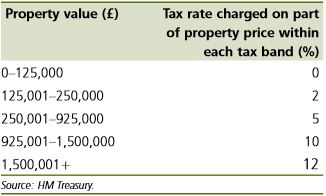
Prior to the Autumn Statement (on 3 December 2014), SDLT was charged on the whole purchase price at a flat rate dependent on the price paid.  So, if you bought a house for £250,000, your stamp duty rate was 1% – ie £2,500.  Increase that to £250,001 and your rate leapt to 3% on the whole amount – ie £7,500.03.  That extra £1 paid for the property cost a whopping £5,000 in tax.

From 3 December 2014, the tax is charged on the marginal purchase price only, at the following rates:

Capture

So, if you buy a property at £250,001, you will pay nothing on the first £125,000, 2% on the next £125,000 and then 3% on the extra £1 – a total of £2,500.03 – a hole lot better than £7,500!

The Chancellor said that 98% of house sales will attract less SDLT as a result of these changes.


This summary is published for the information of clients. It provides only an overview of the main proposals announced by the Chancellor of the Exchequer in his Budget Statement, and no action should be taken without consulting the detailed legislation or seeking professional advice.

Budget 2014 – Summary

George Osborne presented the 2014 Budget on Wednesday 19 March 2014.

This blog focuses on the direct and indirect tax measures announced, as well as the announcements made previously which affect the 2014-15 tax year and beyond.

It concentrates on the issues likely to affect you, your family and your business. To help you decipher what was said I have included some comments too.

If you have any questions please do not hesitate to contact me for advice.

Main Budget proposals

  • The personal allowance for tax will increase to £10,500 from April 2015.
  • Tax relief will be given for the first £10,000 of child care for each child from Autumn 2015 (worth up to £2,000 per child).
  • The staring rate for savings income will reduce to zero on the first £5,000 of qualifying savings from 6 April 2015.
  • ISAs will become NISAs and the investment limit will increase to £15,000, all of which may be in cash.
  • The annual investment allowance for capital expenditure will increase to £500,000 per annum until 31 December 2015.
  • Major changes were announced to defined contribution pension schemes.

Key announcements made previously

Autumn Statement:

  • From 6 April 2015, employers with employees under the age of 21 will no longer be required to pay employers National Insurance contributions (NI) on earnings up to the upper earning limit, for those employees.
  • From 6 April 2016, married couples and civil partners will be able to transfer part of their personal allowance between them in certain circumstances.

Previous budgets:

  • The personal allowance for tax will increase by £560 to £10,000 from April 2014.
  • The main rate of corporation tax rate (ie for larger companies) will decrease to 20% with effect from April 2015.  This aligns the rate with that payable by small companies, and the two rates will be merged.
  • All businesses will be eligible for relief for the first £2,000 of employer’s NI (but this is partly countered by the fact that employer’s will no longer be able to claim back any statutory sick pay paid to their employees).
  • The limit for tax free loans for employees will increase to £10,000 from 6 April 2014.


The Budget proposals may be subject to amendment in the Finance Act. You should contact me before taking any action as a result of the contents of this summary.

This blog is published for the information of clients. It provides only an overview of the main proposals announced by the Chancellor of the Exchequer in his Budget Statement, and no action should be taken without consulting the detailed legislation or seeking professional advice. Therefore no responsibility for loss occasioned by any person acting or refraining from action as a result of the material contained in this summary can be accepted by the authors or the firm.

Budget 2014 – Corporate and Business Tax

Corporation tax rates

As announced previously, the main rate of corporation tax, which generally applies to companies  with profits of more than £1.5 million, will to fall to 21% from 1 April 2014 and 20% from 1 April 2015.

From April 2015, the main rate and small companies rates will be the same and will merge. Until the rates are merged, companies with profits between £300,000 and £1.5 million pay a marginal rate of tax.

Capital allowances

In the Autumn Statement in December 2012, the Annual Investment Allowance (AIA) (the amount that companies can spend on capital equipment and claim a full deduction in that year) was increased to £250,000 (from £25,000) from 1 January 2013 to 31 December 2014.

The Chancellor announced today that the AIA will increase to £500,000 from 1 April (for corporation tax) or 6 April (for income tax) to 31 December 2015, after which it will return to £25,000.

Tax for small unincorporated businesses

As announced in Budget 2012, small unincorporated businesses will be able to use a cash basis for working out their taxable profits for the 2013-14 tax year, so we will now start to see the first accounts being produced on this basis.

Businesses with receipts of less than the VAT registration threshold (which is £79,000 for the 2013-14 tax year and will be £81,000 from 1 April 2014), or twice that if they receive the Universal Credit, will be allowed to join the scheme.  They have to leave the scheme when receipts are more than twice the VAT registration threshold.

Comment: Eligible businesses may benefit from using the cash basis if the amount they are owed by their customers (debtors) plus their stock is generally more than they owe to their suppliers.

This is a timing benefit – there will usually be a one off reduction in profit since they will already have paid tax on the debtors and stock brought forward, but will not have to pay on the debtors and stock carried forward until the next tax year.  Take care though, because the tax will be due at some point – when the business ceases, or receipts go over twice the VAT threshold.

Class 2 National Insurance (NI)

Class 2 National Insurance (paid at a weekly flat rate by the self employed) is currently paid via direct debit or bi-annual bills.

The government is planning to simplify the administrative process of Class 2 NI so that it is collected via the self assessment tax return system, alongside tax and Class 4 NI, with effect from April 2016.

Budget 2014 – Personal Tax

Tax rates

There were no changes to rates of income tax announced in the Budget for 2014-15

Allowances and tax bands

Announced previously were the tax and NI bands for 2014-15.

The personal allowance will be £10,000, with the upper limit of the basic rate tax band (ie the level of income above the personal allowance at which people start to pay tax at 40%) reduced to £31,865.  This means that the income on which you start to pay tax at 40% increases from £41,450 to £41,865.

Comment: This means that most people with straight forward tax affairs and no benefits in kind (for example, cars or health insurance) should have a tax code of 1000L taking effect in April 2014.

Other allowance levels can be found on the HMRC web site at http://www.hmrc.gov.uk/rates/it.htm

The Chancellor announced in the budget that the personal allowance for 2014-15 will increase to £10,500, with a basic rate limit of £31,785. meaning that 40% tax will be payable from £42,285.

Transferable tax allowances for married couples and civil partners

It had been announced previously that, from 6 April 2015, a spouse or civil partner who is not liable to income tax above the basic rate will be able to transfer up to £1,000 of their personal allowance to their spouse or civil partner, provided that the recipient of the transfer is not liable to income tax above the basic rate.

In the 2014 budget, the Chancellor announced that the transferable amount will be set at 10% of the personal allowance, so will start at £1,050 (based on the current personal allowance).

Comment: This is mainly aimed at situations where one partner is a non-tax payer and the other pays tax at 20%.  However, it may also have benefits where one partner has a salary of less than the tax threshold and dividend income taxable at 10% and the other has income, such as PAYE income, taxable at 20% (eg, shareholder-directors taking a salary of the lower NI limit plus dividends within the 20% band).

Starting rate for savings income

From 6 April 2015, the starting rate for savings income will be reduced from 10% to zero, and the maximum amount of qualifying savings income will increase from £2,880 in 2014-15 to £5,000 in 2015-16.

Comment: To explain the savings rate: Say you have a pension of £9,000 and savings income of £5,000.

In 2014-5, your pension and £1,000 of your savings income will fall wholly within the personal allowance and you will pay no tax on it.  This leaves you with £4,000 of taxable savings income.  £2,880 of this is taxable at the 10% starting rate and the remainder at the 20% rate, meaning that you would pay tax of £512.

In 2015-16, your pension and £1,500 of your savings income falls within the personal allowance.  The remaining £3,500 of savings income falls within the savings rate, and is therefore subject to the zero savings rate, so you would pay no tax.

If your earned/pension income is more than the personal allowance, the savings rate is band is reduced by the excess (so, if in 2014-5, your pension was £12,000, you would only qualify for the savings rate on savings income of up to £880 (ie £2,880 savings rate band-(£12,000 pension-£10,000 personal allowance).

Tax relief of childcare

A new childcare scheme was announced in the 2013 budget will be introduced to support working families with their childcare costs, but is still to come into effect.

In 2013, it was announced that childcare costs up to £6,000 per child would be eligible for relief at 20% tax, with only under 5s qualifying in the first year.

In the 2014 budget, the Chancellor announced that the cap would be increased to £10,000 per child (worth up to £2,000 per child each year), and that under 12s would be included within the first year.

The scheme will be rolled out to all eligible families with children under 12 from Autumn 2015.

Tax Credits

There are two types of Tax Credits; Working Tax Credit (WTC) and Child Tax Credit (CTC). The CTC is potentially available to families who have responsibility for one or more child.

There were no changes to tax credits announced in the Budget 2014.   Changes to the rates of payments were announced previously and can be found at http://www.hmrc.gov.uk/rates/taxcredits.htm

Child Benefit

There were no changes announced to child benefit in Budget 2014, although the rates will increase slightly (from £20.30 to £20.50 for the first child and from £13.40 to £13.55 for subsequent children).

A reminder that new rules came in on 7 January 2013 for higher earners which mean that, once the income of one of the parents reaches £50,000, 1% of the Child Benefit award will effectively be lost for every £100 of that parent’s income between £50,000 and £60,000 and at £60,000 of income, any remaining benefit will be withdrawn.

The actual mechanics of the scheme is that Child Benefit will continue to be paid and an additional tax charge will be levied on the parent earning over £50,000, which must be reported in their self assessment tax return.  Alternatively, the tax payer can elect not to receive Child Benefit.

Individual Savings Accounts (ISAs)

Changes were announced to the ISA regime, and from 1 July 2014, all ISAs will become NISA!

There will be a new annual subscription limit of £15,000, which may all be in cash.  Transfers will be allowed from stocks and shares NISAs to cash NISAs.

As of Budget day 2014, you still have a couple of weeks to use your 2012-13 allowance of £11,520 (of which £5,760 may be in cash) – the deadline is 5 April 2014.

Junior ISAs and Child Trust Funds will have an investment limit of £4,000 (previously £3,720) per annum.
Budget 2014 – Employment issues

National Insurance Contributions (NI)

No changes to the rates of NI contributions were announced in the Budget.

The primary and secondary thresholds (at which employees and employers, respectively, start to pay NI) have both been increased to £153 per week.

The upper earnings (or profits for the self employed) limit is £41,865, aligned with the point at which 40% tax becomes payable.

Details of the rates of NI for 2014-15 can be found at http://www.hmrc.gov.uk/rates/nic.htm

Employer’s Employment Allowance

As announced in the 2013 budget, an allowance of £2,000 per annum will be introduced for all businesses and charities to be offset against their employer NI liability from April 2014 – this effectively takes away the first £2,000 of the employer’s NI bill of every company.

Comment: For those of you paying yourselves the National Insurance limit, this means that you should increase your pay to £7,956 per annum (£663 per month) from April.

However, if you have no other income (apart from dividends), you may want to think about paying yourself £10,000 per annum to use your tax free allowance, since, although you will pay NI at 12%, the employer’s NI will be offset by the employment allowance, and you will save corporation tax at 20%, saving you £163 per annum .

Exemption threshold for employer provided beneficial loans

The threshold for employment-related taxable cheap loans to be treated as earnings of the employment will increase from the current threshold of £5,000 to £10,000 from 6 April 2014.  As long as the total outstanding balances on all such loans do not exceed the threshold at any time in a tax year, there is no tax charge.

Abolition of employers National Insurance contributions for the under 21s

From 6 April 2015 every employer with employees under the age of 21 will no longer be required to pay Class 1 secondary National Insurance contributions (NICs) on earnings up to the upper earning limit (UEL), for those employees.

Changes to Statutory Sick Pay (SSP) recovery

A not very well publicised change announced in January 2013 is that, from 6 April 2014, businesses will no longer be able to recover any SSP that they have to pay to their employees.

At the moment, employers can recover any SSP in excess of 13% of their total national insurance bill for each tax month.

Tax exemption for employer expenditure on recommended medical treatment

Currently, when an employer pays for employee medical treatment, the payment is chargeable to tax and NI.

From Autumn 2014 (an exact date has yet to be announced), where an employer meets the cost of ‘recommended’ medical treatment for an employee, that payment will be exempt from income tax and national insurance, up to an annual cap of £500 per employee.

Medical treatment will be ‘recommended’ where it is provided in accordance with a recommendation from an occupational health service in order to help an employee return to work after a period of absence due to ill-health or injury.

Other forthcoming changes

The government is consulting on a package of four simplifications of employee benefits and expenses with a view to bringing them in in 2015-16:

  • abolishing the small earnings threshold of £8,500 that exists for benefits in kind (Note: This limit does not apply for directors, so those paying themselves the lower NI limit, which is less than £8,500, still have to report and pay tax on any benefits)
  • introducing a statutory exemption for trivial benefits
  • introducing a system of voluntary payrolling of benefits in kind
  • replacing the expenses dispensation regime with e reimbursed expenses exemption.


Budget 2014 – VAT

There were no changes announced to the rate of VAT.

The VAT registration and de-registration limits have been increased with effect from 1 April 2014 to £81,000 and £79,000 respectively

Prompt payment discounts

From 1 April 2015, businesses will have to account for VAT on prompt payment discounts.

Currently, no VAT is charged on the discount, even if the customer pays the full amount.

Comment: Say business invoices £1,000 plus VAT with a 10% early settlement discount offered.

Under the current rules, the invoice would be for £1,180 (£1,000 plus VAT on the amount due after the discount).

Under the new rules, the invoice would be for £1,200 – £1,000 plus VAT on the whole amount at 20%.